


For the next several weeks, Living Your Best Life with Genma Holmes will feature many keynotes, panel participants, non-profits, cancer survivors, and students from the 25th Anniversary of the Biennial Symposium on Minorities, the Medically Undeserved and Health Equity. They will address next steps, community engagements, healthcare issues that are persistent and best practices that are helping to eliminate health disparities.


On Saturday, July 14, 2012, we will kick off this series with two forerunners in the fields of medicine, science, education, and research; Dr. Lovell Jones and Dr. Harold P. Freeman. Dr. Lovell Jones is the co-founder of the Intercultural Cancer Council. Dr. Jones was recently awarded The Ruth Kirschstein Diversity in Science Award and was honored this week by the NAACP with the Unsung Hero Award for his work with cancer prevention in the African American community.
Dr. Harold P. Freeman founded and pioneered the concept of patient navigation in 1990 for the purpose of eliminating barriers to timely cancer screening, diagnosis, treatment, and supportive care. It has since evolved to include the timely movement of an individual across the entire health care continuum from prevention, detection, diagnosis, treatment, and supportive, to end-of-life care. Dr. Freeman is also founding president of the state-of-the-art Ralph Lauren Center for Cancer Care and Prevention located in East Harlem.
Living Your Best Life, radio that empowers, inspires, and motivates you to live your BEST life, is heard on 760AM in the Middle Tennessee Region, military bases and lived streamed at Ustream.TV from 9-10AM CST.
More About Dr. Lovell Jones
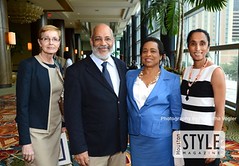
Director
The Center for Health Equity and Evaluation Research (CHEER),
Office of the Vice President for Cancer Prevention & Population Sciences,
The University of Texas MD Anderson Cancer Center (MD Anderson)
Director
Reproductive Biology Program
Graduate School for Biomedical Sciences
The University of Texas Health Science Center - Houston
Professor
Department of Health Disparities Research, MD Anderson
Department of Biochemistry & Molecular Biology, MD Anderson
Graduate School of Social Works, University of Houston
Other
Chair, Health Disparities Education, Awareness, Research & Training (HDEART) Consortium
Cofounder, Intercultural Cancer Council
Founder, Biennial Symposium Series on Minorities, the Medically Underserved & Cancer
Principal Investigator, SECURE Gulf Coast Consortium
Dr. Jones is the founding co-chair of the Intercultural Cancer Council, the nation’s largest multicultural health policy group focused on minorities, the medically underserved and cancer. He has edited "Minorities & Cancer," one of the few comprehensive textbooks on this subject. He is the founding chair of "Minorities, the Medically Underserved and Cancer," the nation’s largest multicultural conference which provides a forum for exchanging the latest scientific and treatment information. This biennial conference brings together people from all ethnic communities and social strata to share strategies for reducing the incidence of cancer among these populations. Dr. Jones spearheaded regional hearings on cancer and the poor for the American Cancer Society. In 2002, Dr. Jones, along with Dr. Armin Weinberg, the other co-founder of the Intercultural Cancer Council, received the Humanitarian Award from the American Cancer Society.
From 1989 to 1995, Dr. Jones was co-principal investigator of the National Black Leadership Initiative on Cancer, the first major minority outreach project sponsored by the National Cancer Institute. He has served on the board of directors of the National Coalition for Cancer Survivorship, the National Advisory Environmental Health Sciences Council of the National Institutes of Health (NIH) and the Prostate Health Council of the American Foundation for Urologic Diseases. Dr. Jones also served on the Institute of Medicine’s Roundtable for Environmental Health Sciences, Research and Medicine and on the Environmental Protection Agency's Scientific Advisory Panel. He currently serves on the Advisory Council for The Benjamin Banneker Institute for Science and Technology and the Partnership for Prevention as well as a number of other national advisory committees.
In 1991, Dr. Jones chaired the Training Session of the Strategic Fact-Finding Meetings on Minority Health and Training in Biomedical Sciences for the Office of the Associate Director for Research on Minority Health (now the National Center on Minority Health & Health Disparities (NCMHD) at the NIH. He also participated in a 1994 review of the activities of the Office of Research on Minority Health at NIH. A co-author of the congressional resolution that designated the third week in April as "National Minority Cancer Awareness Week," Dr. Jones was honored in May 2000 on the floor of the U. S. House of Representatives for his work addressing health disparities among the underserved.
He has served on the Breast Cancer Integration Panel for the Department of Defense and has published over 100 scientific articles on subjects ranging from hormonal carcinogenesis to health policy. His work with estrogen has led to major findings, including the discovery that compounds labeled as weak environmental estrogens may cause adverse effects when exposure occurs during a critical time of development. Because of these results, researchers have begun to rethink when they define environmental estrogens as weak.
In founding the Health Disparities, Education, Awareness, Research & Training (HDEART) Consortium, the efforts are now extending globally. As part of this web page, you will find more information on the effort of HDEART and its attempt to address health disparities utilizing the "Biopsychosocial Model".
Education and Training
Ford Foundation Fellow, Cancer Research Laboratory, University of California at Berkeley
PhD, University of California at Berkeley. Field: Zoology. Emphasis: Endocrinology and Tumor Biology
Postdoctoral Fellow, Reproductive Endocrinology Center, University of California at San Francisco
Research Interests
The relationship between hormones, diet and endocrine-responsive tumors
How natural and environmental estrogenic agents may initiate cancers in hormonally responsive tissue
Dr. Jones’ group published the first report of a cultured, immature, mammary gland cell line with a functioning estrogen receptor. This research may allow scientists to study how breast cancer cells respond to environmental estrogens
For more about Dr. Jones Current Research and more click here.
More About Dr. Harold P. Freeman


Present Positions
President and Founder of the Ralph Lauren Center for Cancer Care and Prevention and New York
Senior Advisor to the Director of the National Cancer Institute in Bethesda, MD
Chief Architect of the American Cancer Society initiative on Cancer in the Poor
Director of Howard University
Diplomat of the American Board of Surgery
Professor of Clinical Surgery at Columbia University College of Physicians and Surgeons
Fellow of the American College of Surgeons
Medical Director of the Breast Examination Center of Harlem, a program of Memorial Sloan-Kettering Cancer Center, since 1979
Trustee of Howard University Hospital since 1993
Elected to membership in the Institute of Medicine of the National Academy of Sciences in 1997
Past Positions
Chief of Surgery and President of the Cancer Center at North General Hospital
Founding Director of the National Cancer Institute Center (NCI) to Reduce Cancer Health Disparities (2000-2005); also Associate Director of NCI during that time
Served as President and Chief Executive Officer of North General Hospital in New York City
Served as National President of the American Cancer Society, 1988-1989
Served as Chairman of the President's Cancer Panel, having been appointed for four terms, first by President George H. W. Bush in 1991, and by President Clinton in 1994, 1997, and 2000
Served as Director of Surgery at Harlem Hospital Center for 25 years (1974-1999)
Awards & Recognitions
Honorary Doctor of Science degrees have been awarded to Dr. Freeman from Albany Medical College, Niagara University, Adelphi University, and Catholic University of America. He was also awarded the University of California at San Francisco Medal. Other selected awards include: The Mary Lasker Award for Public Service; the Time, Inc. International Health and Medical Media Awards' Lifetime Achievement Award; the American Cancer Society's Medal of Honor; the CDC Foundation's Champion of Prevention Award; the Breast Cancer Research Foundation's "Jill Rose Award," the American Society of Clinical Oncology's Special Recognition Award; the Avon Breast Cancer National Leadership Award; the Susan G. Komen Breast Cancer National Foundation's Betty Ford Award; the International Spirit of Life Foundation and the Washington Cancer Institute's Spirit of Life Award; the Mayo Clinic Charles G. Moertel Memorial Lectureship Award; the Association of Community Cancer Centers' Achievement Award; the George Washington University Cancer Institute's Distinguished Public Service Award; the Rudin Prize in Medicine and Health; the Dorothy Height Lifetime Achievement Award; and the First Annual Medical Assembly "Humanitarian Award" at the United Nations Meeting the Global Challenge of Cancer in New York City.
Dr. Freeman was recognized by Black History Makers in 2006 with the Daniel Hale Williams Award. The American Cancer Society established the "Harold P. Freeman Award" in 1990 to recognize his work in dealing with the interrelationships between race, poverty, and cancer. This award is presented annually by American Cancer Society divisions throughout the United States to individuals who have made outstanding contributions to the fight against cancer in the poor.
Education
Dr. Freeman received an A.B. degree from the Catholic University of America, and a M.D. degree from the Howard University College of Medicine. At Catholic University, Dr. Freeman received the Harris Award for "Outstanding Scholar, Gentleman, and Athlete," and was later recognized as "Outstanding Alumnus in the Medical Arts" and inducted into the Athlete's Hall of Fame of the University. Additionally, he received the Daniel Hale Williams Award for Outstanding Achievements as Chief Resident at Howard University Hospital.


